Ransomware & ECM in 2026: Backup, Immutability, and Recovery Planning
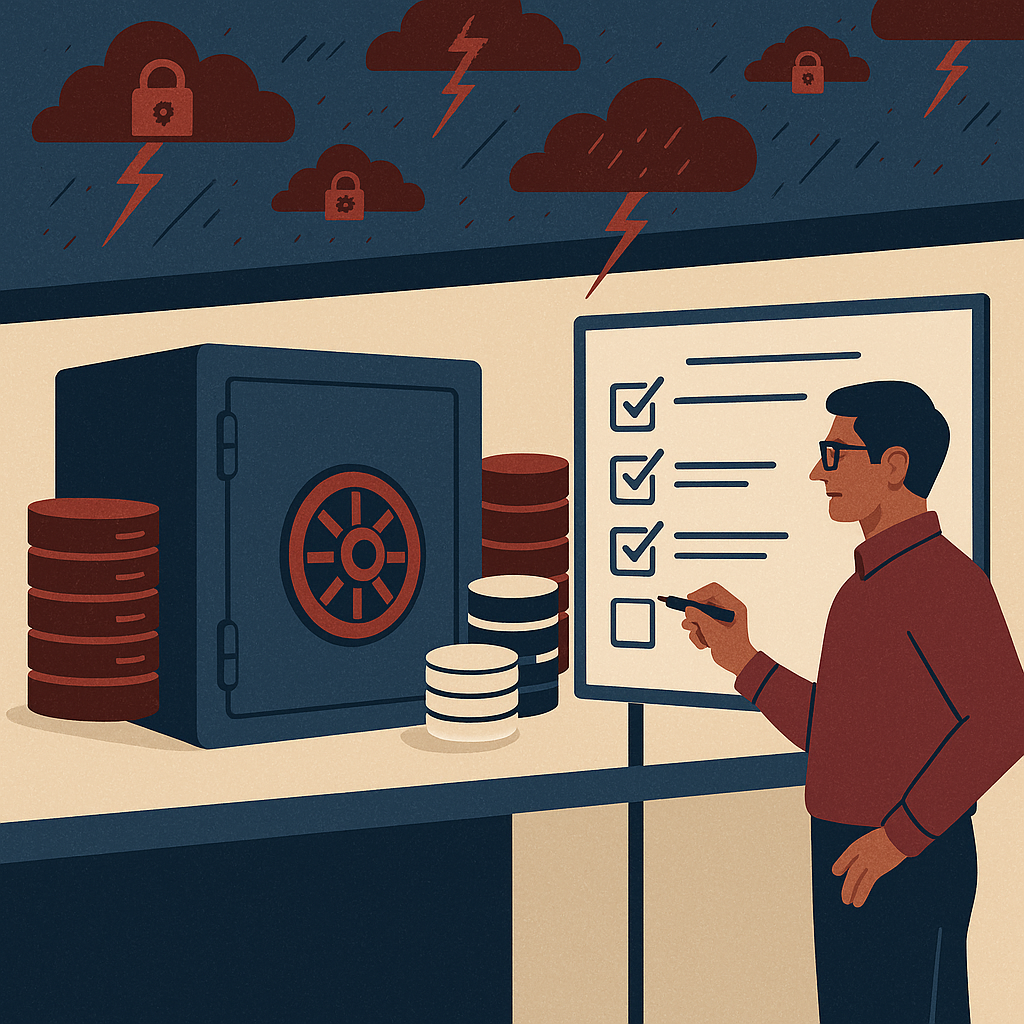
Ransomware protection ECM in 2026: immutability, backups, disaster recovery planning, and access lockdown to protect enterprise content — with audit-grade evidence your regulators and auditors will accept.
In 2026, ransomware isn't "just" a security incident—it's an operational shutdown risk that tests how quickly you can prove integrity, restore services, and satisfy regulators. That's why ransomware protection ECM has become a board-level discussion for global and India-based enterprises alike: your content platform now sits at the crossroads of productivity, compliance, and resilience.
The uncomfortable reality is that ransomware groups increasingly target the systems that hold business truth—contracts, invoices, quality records, HR files, engineering documents, email archives—and then go after the recovery path itself. A credible response plan therefore needs more than "we have backups." It needs immutable storage you can trust, a tested backup strategy, a rehearsed disaster recovery runbook, strong access lockdown controls, and an end-to-end audit trail across the enterprise content management lifecycle.
Why ECM is Now a Primary Ransomware Target
Modern enterprise content management platforms are no longer passive repositories. They automate workflows, integrate with ERP/CRM, orchestrate approvals, and serve distributed teams across geographies. That value also makes them attractive: attackers can encrypt high-dependency shared drives, corrupt metadata, and hold content services hostage to stall procurement, finance close, and customer onboarding.
The risk is amplified when content is scattered across file shares, email PSTs, and ad-hoc cloud folders without consistent governance. If you're assessing platform maturity, review your baseline security posture and compliance controls alongside content architecture. A practical place to start is to align security and compliance expectations with governance design (see strengthening security and compliance and the broader governance & compliance approach).
The 2026 Pattern: Encryption + Exfiltration + Recovery Sabotage
Most enterprise incidents now combine three moves: encryption of active data, exfiltration for double/triple extortion, and attempts to delete or tamper with backups and logs. If your backup strategy lacks tamper resistance, or your audit trail can be altered, you lose the ability to prove what happened—and when—during incident response. For ransomware protection ECM, integrity evidence is as important as restoration speed.
A Practical Blueprint for Ransomware Protection ECM
Buyers often ask whether they should prioritize tooling (immutable vaults, EDR, SIEM) or process (runbooks, exercises, RACI). The answer is both—sequenced. For ransomware protection ECM, start by engineering containment and recoverability into the platform, then validate it through drills and measurable objectives.
1) Make Immutability Real (Not Just a Checkbox)
Immutable storage is the anchor of trustworthy recovery—especially for finance, regulated records, and contract repositories. But "immutable" should mean: time-bound write-once protection, separation of duties, and independent retention enforcement. In practice:
- Use immutable storage for backup copies and selected record classes (e.g., signed contracts, batch records, statutory registers).
- Enforce WORM/retention locks that even admins cannot casually disable (separation of duties matters).
- Maintain an immutable copy of critical metadata and workflow history so you can validate integrity after restoration.
Done right, immutable storage shortens investigations and reduces the "do we trust this data?" debate that burns time during a crisis. It also complements your enterprise content management retention and legal hold policies rather than competing with them.
| Content Class | Immutability Needed | Suggested Lock Period | Who Can Override |
|---|---|---|---|
| Signed contracts | Essential | Contract term + 7 years | Legal head + CISO only |
| Statutory / regulatory records | Essential | Per regulation (min 7 years) | Compliance officer only |
| Finance & AP documents | Strongly recommended | 8 years (IT Act) | CFO + IT Security |
| HR & employee records | Strongly recommended | Employee tenure + 5 years | CHRO + CISO |
| Backup copies (all classes) | Recommended | Aligned to primary retention | Isolated credentials only |
| Operational / working docs | Optional | Version history only | Department owner |
2) Upgrade Your Backup Strategy from "Daily Copy" to "Recoverable Service"
A modern backup strategy for ECM must account for databases, indexes, object stores, configuration, integrations, and identity dependencies. Key moves:
- Define RPO/RTO per content domain (AP invoices vs. engineering drawings won't be equal).
- Back up both content binaries and metadata/workflow states; partial restores can break search and traceability.
- Store at least one backup set on immutable storage with isolated credentials.
- Test restore in an isolated environment monthly; measure time-to-search and time-to-approve, not just time-to-boot.
3) Engineer Access Lockdown Without Freezing Productivity
When an incident hits, speed matters—but indiscriminate shutdowns can create secondary outages. A mature access lockdown design lets you contain spread while keeping essential functions alive. Consider:
- Role-based access plus conditional access for privileged operations.
- Just-in-time admin elevation with approvals and expiration.
- Granular content-level permissions to reduce "blast radius."
- Emergency "read-only mode" for selected repositories to maintain business visibility during response.
Strong access lockdown also prevents attackers from tampering with retention settings, deleting versions, or modifying the audit trail. For enterprises evaluating platforms, explore how a modern enterprise document management system supports least privilege and operational continuity.
Building a resilience-ready ECM program?
ShareDocs Enterpriser supports immutable records, granular access lockdown, and audit-grade evidence — deployed in 3 days on cloud.
4) Treat Disaster Recovery as a Repeatable Exercise, Not a PDF
The best disaster recovery plans are executable under stress. For ECM, a working disaster recovery approach includes environment provisioning, identity recovery, certificate/secret rotation, and validation of content integrity post-restore. Map dependencies explicitly—SSO, email gateways, ERP connectors, OCR services, and downstream analytics.
Run quarterly simulations with real business users: can AP approve invoices? Can QA retrieve batch records? Can legal produce a contract and its history? This is also where the audit trail must survive restoration intact to prove continuity and support root-cause analysis.
What "Good" Looks Like: Measurable Controls Buyers Can Ask For
For CIOs, Compliance leaders, and Ops heads, the goal is to move from "we think we're protected" to evidence-backed assurance. Use these measurable checks:
- Immutable storage coverage: which repositories and backup sets are truly immutable, for how long, and who can change retention?
- Backup strategy metrics: last successful restore test date, restore time for top 5 business processes, and gap analysis for integrations.
- Disaster recovery readiness: documented RTO/RPO per domain, quarterly drill results, and dependency maps updated after changes.
- Access lockdown posture: privileged access workflow, emergency modes, and segmented permissions to contain lateral movement.
- Audit trail integrity: tamper-evidence, retention settings, and exportability for investigations and regulator requests.
FAQ
Build Recovery-Ready ECM Before the Next Incident
If you're planning a 2026 resilience roadmap, align your enterprise content management program with ransomware protection ECM requirements: immutability, validated restores, controlled access, and audit-grade evidence.
Request a Demo Start Free TrialLast Reviewed: May 2026 | Category: Audit Trail | This article is for informational purposes. For platform-specific implementation guidance, contact the ShareDocs team or refer to the ShareDocs FAQ.

Comments
Post a Comment