Posts

Showing posts with the label ShareDocs Enterpriser

ECM Retention Policy in 2026: Strengthening Records Management and Compliance

Image
ECM Retention Policy in 2026: Records Management, Legal Hold, and Compliance ECM Retention Policy in 2026 : Strengthening Records Management and Compliance In 2026, poorly defined document retention is one of the biggest compliance risks for enterprises. Without a structured ECM retention policy , organizations face legal exposure, storage chaos, and audit failures. Modern enterprise content management platforms must enforce retention automatically — not manually. A strong records management strategy ensures documents are retained for the right duration, protected under legal hold when required, and securely disposed of once policies allow. Why ECM retention policies matter more in 2026 Regulators now demand defensible retention practices. Enterprises must prove that records are neither deleted prematurely nor stored indefinitely. A compliance-ready DMS enforces this balance through automation. Common retention challenges enterprises face 1) Over-retention i...

Data Loss Prevention in Enterprise Content Management: Protecting Documents in 2026

Image
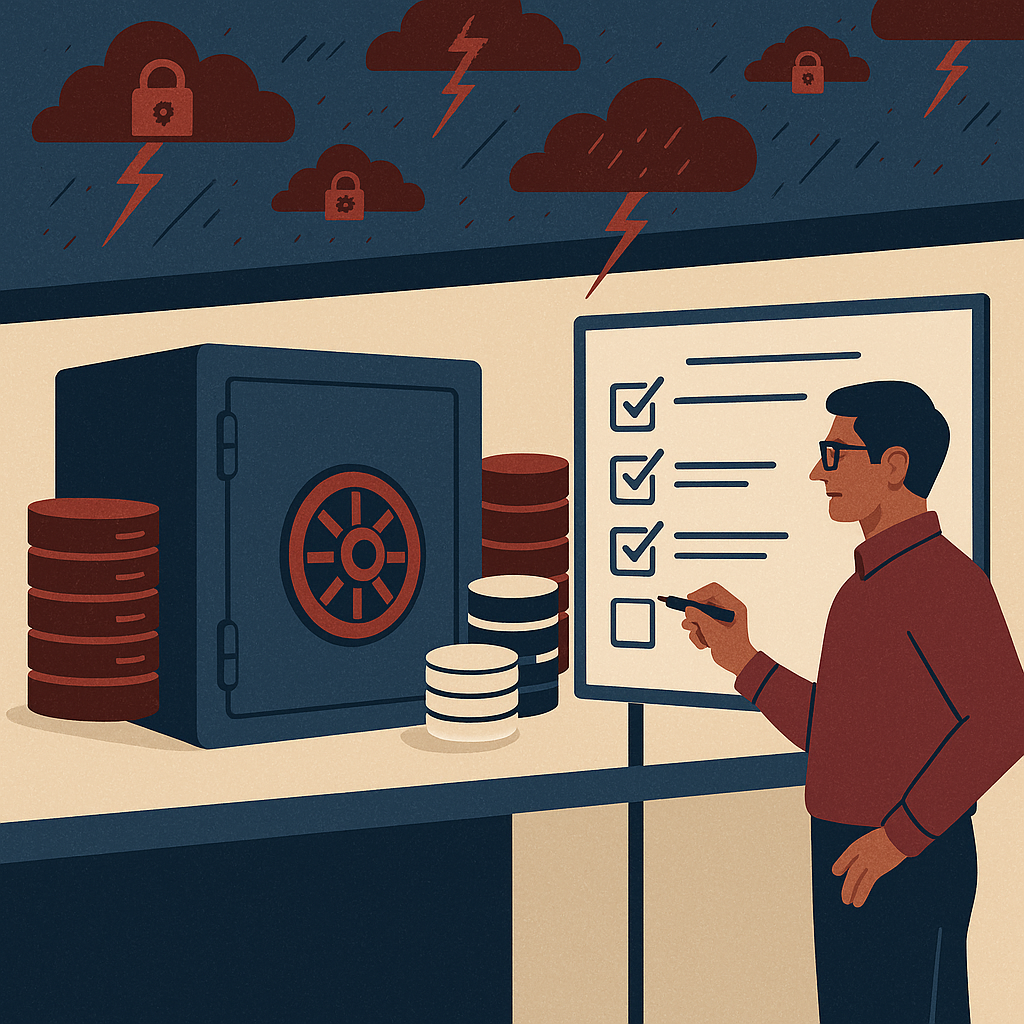
Data Loss Prevention in ECM: How to Stop Document Leaks in 2026  Data Loss Prevention in Enterprise Content Management : Protecting Documents in 2026 A single leaked document can cost millions in fines, reputation damage, and legal exposure. In 2026, organizations can no longer rely on employee awareness alone. They need embedded data loss prevention controls inside their enterprise content management systems. Modern DLP in ECM ensures sensitive documents never leave controlled environments without authorization. It protects against accidental sharing, malicious insiders, and unsecured external transfers — all while preserving productivity. Why DLP in ECM is essential in 2026 Remote work, cloud sharing, and partner collaboration have increased leak risks. Without data loss prevention built into enterprise content management , organizations lose visibility and control over critical documents. The most common document leak scenarios 1) Accidental external ...

ECM Security in 2026: Zero-Trust Protection for Enterprise Content Management

Image
ECM Security in 2026: Zero-Trust, MFA, and Governance for Enterprise Content  ECM Security in 2026: Zero-Trust Protection for Enterprise Content Management In 2026, ECM security is no longer just about storing documents safely. It’s about continuously verifying every user, every device, and every access request. With remote teams, external partners, and cloud deployments becoming standard, enterprises must adopt a zero-trust ECM model to stay protected. A single uncontrolled file share can now trigger regulatory penalties, data leaks, and reputational damage. That’s why modern enterprise content management platforms embed security, compliance, and governance into every layer. Why ECM security has become a board-level concern Cyber threats, insider risks, and compliance audits have converged. Without ECM security built on zero-trust principles, enterprises struggle to prove control over sensitive content. The key security challenges enterprises face in...

Agentic AI Workflows in 2026: The Rise of Autonomous Enterprise Content Management

Image
Agentic AI Workflows in 2026: The Rise of Autonomous Enterprise Content Management Agentic AI Workflows in 2026: The Rise of Autonomous Enterprise Content Management Artificial Intelligence has already automated data extraction and document classification. But in 2026, the next leap is here: agentic AI workflows . These are AI systems that don’t just assist — they act, decide, and continuously improve processes. This is transforming enterprise content management from a passive system into an active digital workforce. Organizations adopting agentic AI workflows gain faster turnaround, lower manual effort, and consistent compliance. Those that ignore this shift risk slow operations, fragmented workflows, and growing governance gaps. What are agentic AI workflows? Unlike traditional automation, agentic AI workflows analyze content, interpret context, make decisions, and execute tasks. Inside enterprise content management , this means approvals, validations, escalation...

AI in ECM 2026: From Intelligent Document Processing to Smart Decision Workflows

Image
AI in ECM 2026: From Intelligent Capture to Smart Decision Workflows AI in ECM 2026: From Intelligent Document Processing to Smart Decision Workflows Artificial Intelligence is no longer an experimental add-on in content platforms. In 2026, AI in ECM has become the backbone of how enterprises capture information, automate decisions, and maintain compliance. What started as simple OCR has evolved into intelligent document processing , predictive workflows, and AI-driven governance. Enterprises that fail to adopt AI in ECM face rising operational costs, slow approvals, and higher compliance risks. Those who embrace it achieve faster turnaround, reduced manual effort, and audit-ready automation. Why AI in ECM matters in 2026 In 2026, enterprises handle millions of documents monthly. Manual classification, data entry, and routing simply don’t scale. Intelligent document processing combined with enterprise content management is now essential for speed, accuracy, and co...

From Traditional DMS to Modern Enterprise Content Management: Why Enterprises Must Upgrade in 2026

Image
From Traditional DMS to Modern ECM: Why Enterprises Must Upgrade in 2026 From Traditional DMS to Modern Enterprise Content Management : Why Enterprises Must Upgrade in 2026 For years, a basic Document Management System was enough. Store files, control versions, search when needed — done. But in 2026, this approach is no longer sufficient. Organizations now face stricter compliance rules, growing content volumes, remote collaboration needs, and rising security threats. That’s why the shift from DMS vs ECM has become a strategic decision, not just a technology upgrade. A traditional DMS focuses on document storage. A modern enterprise content management platform focuses on governance, automation, compliance, and measurable business outcomes. Enterprises that fail to evolve will struggle with audit findings, inefficient workflows, and information silos. DMS vs ECM in 2026 — What’s really changing? The real shift in DMS vs ECM is this: DMS manages files. Enterprise...

ECM in 2026: The 10 Biggest Enterprise Content Management Challenges (and How to Fix Them)

Image
ECM in 2026: The 10 Biggest Enterprise Content Management Challenges (and How to Fix Them) ECM in 2026: The 10 Biggest Enterprise Content Management Challenges (and How to Fix Them) If your organization is serious about scaling processes, reducing risk, and supporting distributed teams, you’re going to feel the ECM challenges 2026 brings—hard. The biggest shift is that enterprise content management is no longer just “store documents and search.” It’s now about governance, security, automation, and decision-grade traceability across every department. In 2026, the most common failure pattern is simple: business teams face information overload , IT teams inherit risk, and compliance teams demand proof. If your platform can’t show a reliable audit trail and can’t enforce a secure document workflow , you will spend more time defending your process than improving it. What’s new about ECM challenges in 2026? The “new” part isn’t o...

Workflow Automation: The Ultimate Guide for Modern Enterprises

Image
Workflow Automation: The Ultimate Guide for Modern Enterprises In today’s competitive business landscape, organizations are under constant pressure to operate faster, smarter, and with greater accuracy. Whether it is managing documents, routing approvals, onboarding employees, handling vendor contracts, or ensuring compliance, manual processes slow down growth and introduce risk. This is where workflow automation becomes a transformative force. For companies across industries—manufacturing, BFSI, logistics, healthcare, aviation, and services—workflow automation is no longer a luxury; it is a strategic necessity. This comprehensive guide explores everything you need to know about workflow automation, including its benefits, business impact, real-world use cases, industry applications, implementation strategies, ROI, and how ShareDocs Enterpriser enables organizations to automate mission-critical workflows with speed and accuracy. By the end of this detailed article, you will ha...

Understanding Document Workflow Automation: Benefits Beyond Speed

Image
Understanding Document Workflow Automation: Benefits Beyond Speed In today’s fast-moving business environment, managing documents manually is no longer sustainable. Whether it’s invoice approvals, contract routing, or policy updates, the volume and complexity of workflows demand a smarter solution. This is where workflow automation tools come in—not just to accelerate tasks, but to transform how your organization handles processes. What is Document Workflow Automation? Document workflow automation refers to the use of automated workflow solutions to route, track, and process documents across departments without manual intervention. From HR onboarding to accounts payable, automation brings structure and intelligence to every step. Why Speed is Just the Beginning While speed is a major perk, automated document workflows offer far more: Error reduction – Avoid manual entry mistakes and process deviations. Audit readiness – Automatically log who did what, when, and why....

Document Management for Banks: Compliance, Audit, and Beyond

Image
Document Management for Banks: Compliance, Audit, and Beyond Why Banks Need More Than Just File Storage In a highly regulated industry like banking, managing documents is not just about storage—it's about compliance, traceability, and security . From RBI inspections to internal audits, every piece of information must be readily accessible, correctly categorized, and fully traceable. As banks digitize more services, the volume of documents is exploding—customer records, onboarding forms, loan documents, audit trails, and regulatory communications. A scattered or poorly managed system increases operational risk. Without a centralized and automated document repository, institutions struggle to maintain transparency, consistency, and timely reporting. This makes an intelligent Document Management System a must-have. 🔢 Challenges Faced by Banking Institutions Paper-based processes and decentralized document silos Difficulty in producing audit trails during inspec...

📄 Smart Contracting for Legal Teams - Most Effective Contract Management Tools Today

Image
  📄 Smart Contracting for Legal Teams: Why ShareDocs Enterpriser is One of the Most Effective Contract Management Tools Today Legal teams are under increasing pressure to handle a growing volume of contracts—faster, more securely, and without compromising compliance. Whether you're a law firm managing dozens of NDAs and client agreements or a corporate legal department overseeing complex vendor MoUs and employment contracts, traditional tools like Word folders, spreadsheets, or email-based approvals just don’t cut it anymore. Enter ShareDocs Enterpriser, an advanced contract management tool purpose-built for the legal ecosystem. It empowers law firms and legal departments to automate contract creation, streamline approvals, and track compliance effortlessly—all within a secure, enterprise-grade ECM environment. ⚖️ Why Legal Teams Need Smart Contract Management Tools Legal operations are document-heavy and deadline-driven. Yet, many law firms and in-house teams still ...